
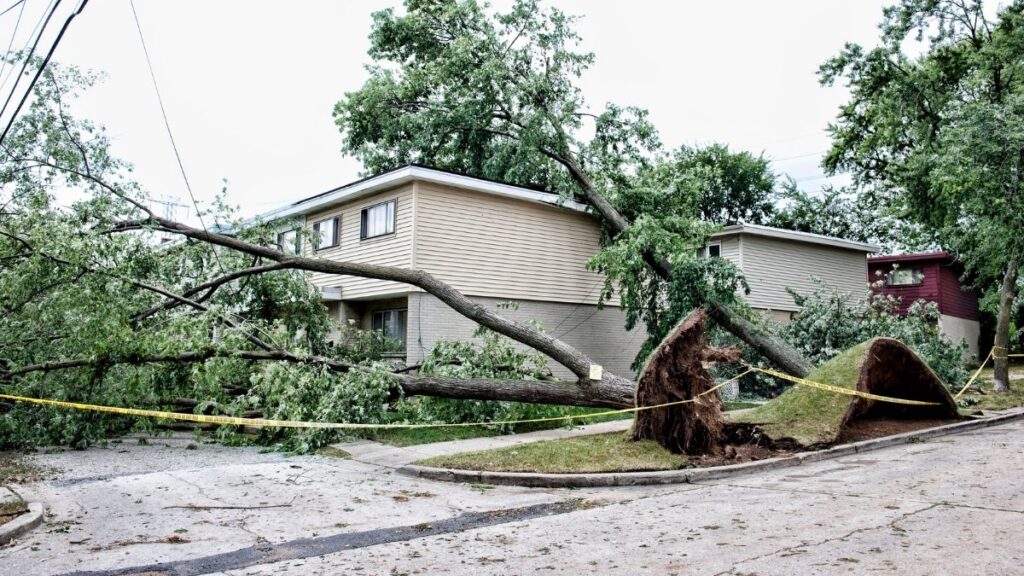
Severe weather commonly raises questions for community associations, especially when trees come down. Who removes the tree? Who pays for repairs? How does insurance respond?
1. Tree Removal vs. Repairs—Two Different Coverage Questions
Tree removal and repairing property damage are handled differently under most insurance policies.
Tree Removal is typically covered only if the tree damages a covered structure. (IE a covered building, clubhouse, fence, etc.) If the tree falls without causing structural damage, removal costs are considered a maintenance expense.
Repairs are typically covered if the association's property policy covers damage to association-owned structures. For Condos: the unit owners’ HO-6 policies address interior damage per governing documents and state law.
2. Responsibility When a Community Tree Damages a Homeowner’s Property
If the tree was healthy and fell due to natural causes, then the homeowner's insurance generally pays for damage to their property. The association is not automatically liable simply because the tree originated on common property.
Liability could arise if the association knew (or should have known) that the tree was dead, diseased, or dangerous and failed to act.
3. When a Tree Damages Third-Party Property (Neighbor, Vehicle, Public Area)
If an association tree damages a neighbor’s property or a vehicle, negligence rules above still apply. Without negligence, the third-party files with their own insurer. With negligence, the association’s liability policy may respond.
Maintaining records for the trees is essential. This would include any homeowner complaints of dead or diseased trees, arborist inspections of trees, etc.
4. When a Homeowner’s Tree Damages Association Property
If a homeowner’s tree falls onto common property, then the association’s property policy covers the repairs as per policy terms and conditions.
Liability may shift to the homeowner only if negligence is proven.
5. Deductible Allocation for Storm-Related Damage
Deductible rules depend on state statutes and governing documents. Many windstorm or named-storm deductibles are separate from (and higher than) the property deductible. Some states restrict how much can be charged back to unit owners.
6. Practical Steps for Associations After a Tree Falls
Associations should follow a consistent procedure:
- Ensure safety first—block off areas, check utilities, and document the scene.
- Verify whether property damage occurred before contacting insurance.
- Remove debris that poses immediate hazards.
- Engage a licensed arborist to assess remaining trees for risk.
- Notify homeowners promptly when damage impacts units or limited common elements.
- Coordinate with your insurance broker on next steps, claim filing, and repair responsibilities.
7. Proactive Risk Management for Associations
Storm losses can’t be stopped, but losses and disputes can be minimized by:
- Maintaining a professional tree-care program
- Keeping a tree inventory
- Documenting diseased or damaged trees and corrective actions
- Establishing a post-storm inspection process
- Reviewing insurance policies annually with a broker specializing in community associations
Proactive planning strengthens both the community’s physical safety and its financial resilience.
For more information, please email us at info@communityriskadvisors.com .