
What Community Associations Need to Know
Is water damage the same as flood damage?
When it comes to insurance, the answer is no.
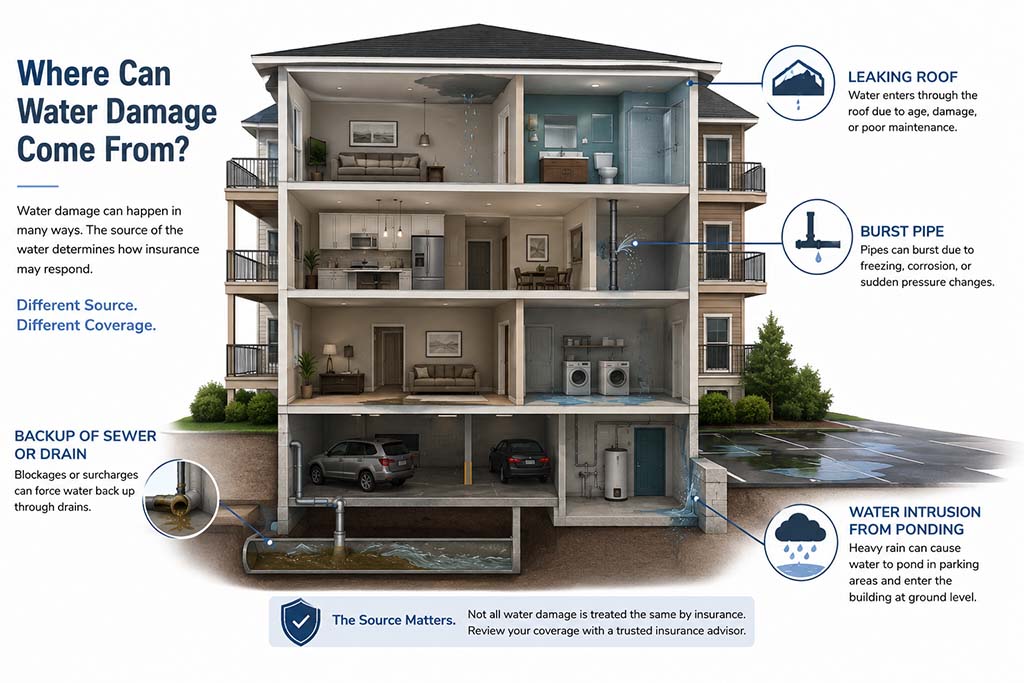
A burst pipe, backed-up drain, leaking sprinkler system, and rising water from a storm can all result in significant water damage to a condominium, homeowners association (HOA), or other community association property.
But insurance policies may treat each of these situations very differently.
The key question is often not simply “Was the property damaged by water?”
It’s:
“Where did the water come from?”
Understanding the difference between water damage and flood damage can help community association managers and boards identify potential insurance gaps before a loss occurs.
What Is Considered Water Damage?
“Water damage” is a broad term. In everyday conversation, it can describe almost any property damage caused by water.
Insurance policies are more specific.
The source and cause of the water can determine which portion of an association’s insurance program may respond—or whether coverage applies at all.
For example, water damage could result from:
- A burst or leaking pipe
- A broken sprinkler line
- A plumbing-system failure
- A sewer or drain backup
- Rain entering a building
- Surface water entering from outside
- Rising water during a major storm
Although the resulting damage may look similar, these events aren’t necessarily insured in the same way.
What Is Considered Flood Damage?
Flood has a specific meaning in insurance.
Generally, a flood involves water accumulating on normally dry land and meeting certain conditions defined by the applicable flood policy.
This distinction is particularly important because flood is commonly excluded from standard commercial property insurance unless flood coverage has specifically been purchased or added.
Consider two buildings with water covering the first floor.
In one building, a pipe bursts overnight.
In the other, rising surface water enters during a major storm.
Both buildings have water damage. But the cause of the damage is different—and potentially so is the insurance coverage.
Does Property Insurance Cover Water Damage?
It can, depending on the cause of the loss and the association’s specific policy.
Certain sudden and accidental events, such as a burst pipe, may be covered under a commercial property policy. Other causes of water damage may be excluded, limited, or require additional coverage.
This is why community associations shouldn’t assume that having property insurance means every type of water damage is covered.
The policy language and cause of loss matter.
Is Sewer or Drain Backup the Same as Flooding?
Not necessarily.
Sewer and drain backup is another area that can cause confusion for community associations.
A backup may require specific coverage or an endorsement under the association’s property insurance program. When a backup occurs in connection with a larger flood event, determining which coverage applies can become more complicated.
Community managers and board members should have a general understanding of whether the association carries water or sewer backup coverage and what limitations may apply.
They don’t need to become insurance experts. That’s where a trusted insurance advisor can add real value—helping the board and management understand how the association’s coverage works, where potential gaps may exist, and what questions should be considered before a loss occurs.
Why the Difference Matters for Community Associations
Water losses can become expensive quickly, especially in multifamily buildings and community association properties.
A relatively small leak can affect multiple floors, units, common areas, mechanical systems, and building finishes. A major flood can create an entirely different level of property damage.
Understanding how the association’s insurance program treats these exposures can help managers and boards make more informed insurance decisions.
Consider asking your insurance advisor:
“How does our insurance program respond to the different ways water could damage our property?”
That discussion should consider potential exposures such as plumbing failures, sprinkler leaks, sewer and drain backup, storm-related water intrusion, surface water, and floods.
Different causes may involve different deductibles, limits, exclusions, endorsements, or separate insurance policies.
Ultimately, coverage depends on the specific circumstances of a loss and the language of the applicable insurance policy.
While no one can predict exactly how a future loss will occur, your trusted advisor provide information and recommendations before a loss happens.
Community Risk Advisors provides insurance and risk management guidance to community associations. This article is for general educational purposes and is not intended to provide legal advice or determine coverage for a particular claim. Coverage is determined by the facts of the loss and the terms, conditions, limitations, and exclusions of the applicable insurance policies.